Description
Alya Bensa Washing Station
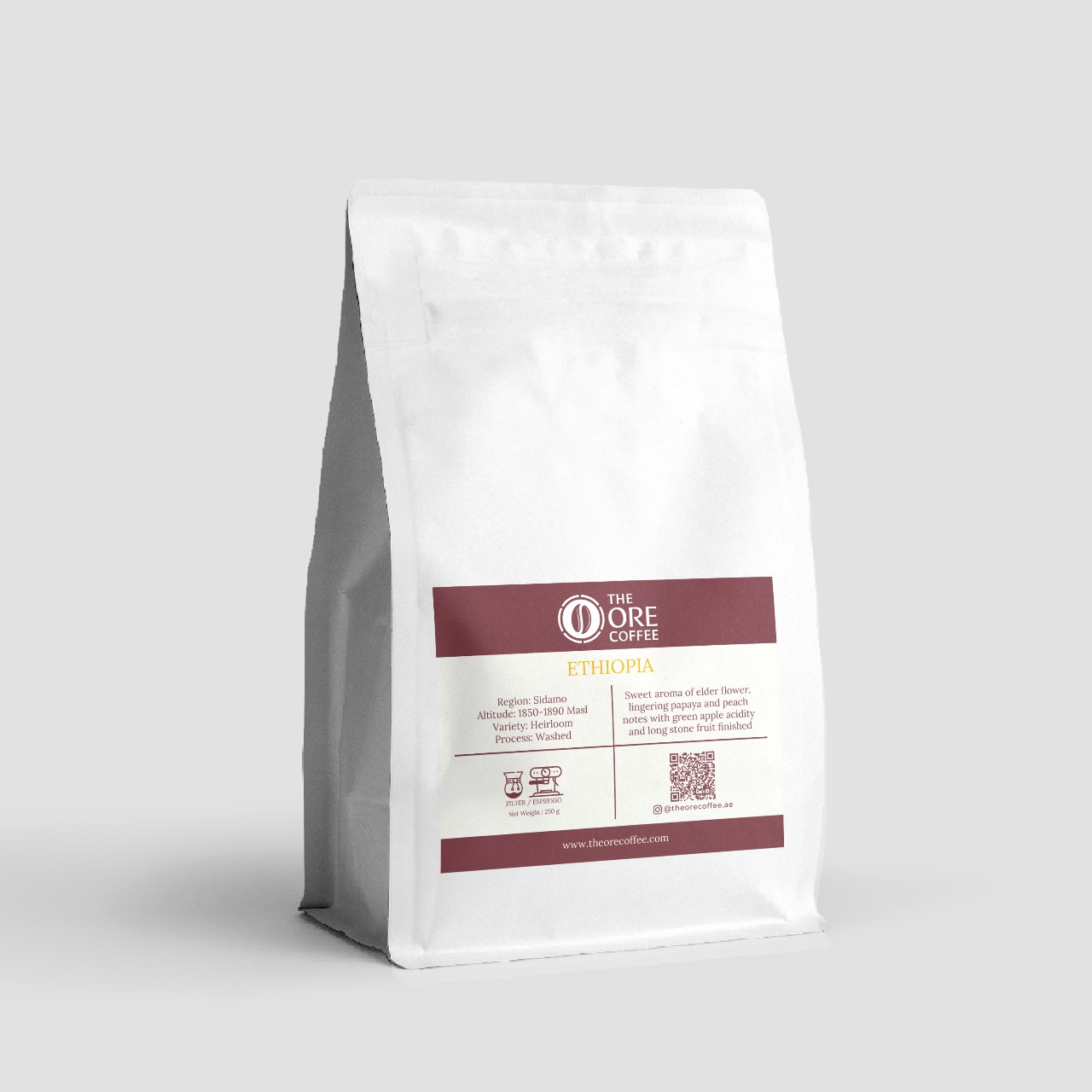
For many decades, the Sidamo region has been a significant hub for Ethiopian coffee production. Going back as far as the 1940s, commercial coffee plantations were established in this area. Although Sidamo is relatively smaller in size compared to other regions, it contributes significantly, accounting for a remarkable 28 percent of Ethiopia’s coffee production, as per export records from 2005. So, where exactly is this highly productive region located?
The Sidama region can be found in southern Ethiopia, which is a common location for coffee production across the country. Until 2020, this region was a part of the Southern Nations, Nationalities, and Peoples’ Region (SNNPR). It has since become one of Ethiopia’s newest regional states, with its administrative center in Hawassa. The Sidama region’s abundance of microclimates, coupled with the existence of various coffee landraces that have been passed down through generations within families or communities, results in a wide array of coffee varieties flourishing in this region.
Amidst this region known for its exceptional coffee offerings, Bombe coffee, processed at the Ayla Bensa washing station, stands out as truly exceptional.
Processing at Alya Bensa Washing Station
In contrast to the higher-altitude farms, Bombe coffee undergoes processing at a lower elevation at the Ayla Bensa washing station. The washing station has a purchasing point, eliminating the need for farmers to travel long distances to sell their coffee cherries to the Ayla Bensa team.
Once the cherries arrive at the Ayla Bensa washing station, Bombe coffee is processed as a distinct batch, carefully separated from other coffees to protect its unique flavor profile. The washing process commences with the removal of the pulp, followed by a couple of days of fermentation in water. Subsequently, the coffee beans undergo a manual rinsing phase and are then laid out on raised beds to dry until they reach the desired moisture content.
Sidamo Cultivation
Many argue that the strength of Sidamo coffee lies in the region’s rich diversity of flavor profiles. This diversity is a result of the various microclimates and soil types present in different towns. However, what ties all Sidamo coffees together is a deep complexity attributed to the wide range of local landrace coffee varieties. These varieties can vary from town to town and even from one farm to another, with each farmer often cultivating unique varieties rarely found beyond their own plots.
When these diverse coffee varieties are blended at the local cooperative, the resulting blend showcases the intricate genetic makeup of the area’s coffee plants.
Farming practices in Sidamo are largely traditional. Sidamo farmers typically grow coffee alongside other food crops in a practice known as intercropping. This approach is common among small-scale farmers as it optimizes land usage and provides sustenance for their families.
Moreover, most farms in Sidamo adhere to traditional and organic practices by default. Farmers in Sidamo generally use minimal, if any, fertilizers, or pesticides. Much of the farm work is carried out manually, and mechanization is rarely employed, even during the processing stage.
Sidamo Harvest & Post Harvest
Farmers meticulously hand-select fully ripe coffee cherries and transport them to the processing station. Upon arrival, station personnel visually examine the cherries and only accept those that are completely ripe for the anaerobic fermentation process. These chosen cherries are then tightly packed into GrainPro bags, which are securely sealed. The cherries undergo anaerobic fermentation, meaning they ferment without the presence of oxygen, for a period of 18 to 24 hours.
After the fermentation phase, the cherries are delicately removed from the bags and placed on raised beds to dry under the direct sunlight. Workers regularly turn the cherries to ensure even drying. This drying process typically takes around 2 to 3 weeks to complete.
About Sidamo Bensa Bomba Taste Profile
Bomba, situated in the elevated Bombe mountains within the Bensa district of Sidama, is characterized by its high altitude, approximately 2000 meters above sea level. This elevated location is a significant factor contributing to the exceptional quality of Bombe coffee.
The extremely high altitudes present challenges for coffee cultivation. The colder climate slows down the growth cycle, resulting in an extended development period. Coffee cherries from higher altitudes typically have later harvests compared to those from lower elevations, even when they are in proximity. Moreover, the elevated terrain provides better natural drainage, which reduces the amount of freely available water for the coffee trees.
The outcome of these conditions is a slowly maturing coffee cherry that is small, dense, and bursting with flavor. Furthermore, coffee cherries in Bombe tend to ripen uniformly. This uniform ripening simplifies the cherry-picking process since all the cherries are perfectly ripe for harvesting at the same time. These various factors come together to create Bombe coffee’s delightful flavor profile, characterized by vibrant citrusy and floral notes.




Reviews
There are no reviews yet.